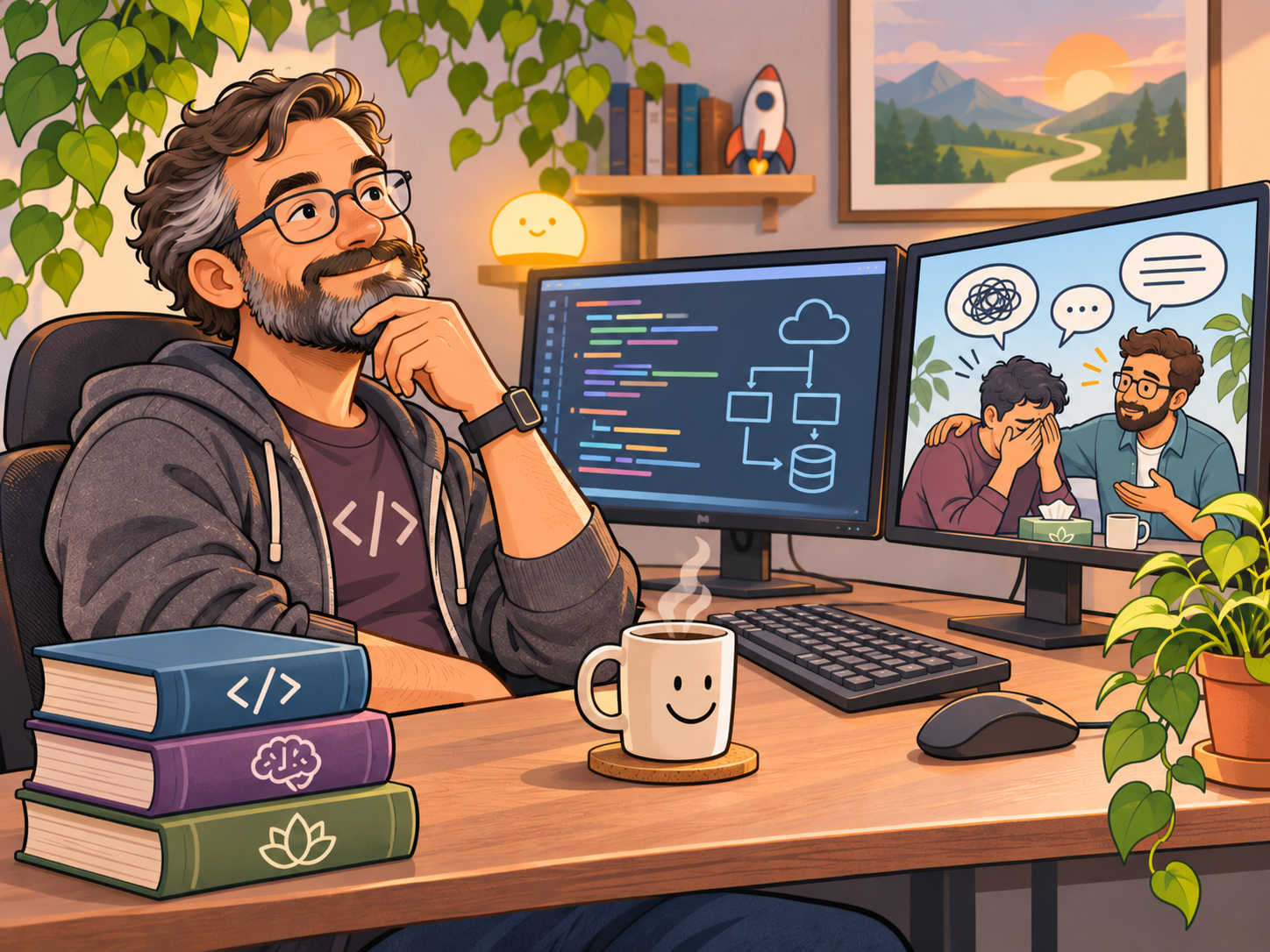
Over the past few years, I’ve spent considerable time working in mental health, including my experience as a Peer Support Worker. I’ve also been studying towards a Certificate IV in Mental Health. Recently, as I’ve rediscovered my passion for software engineering, I’ve started reflecting on how these experiences might make me a better IT professional. Interestingly, I think some of the most valuable skills I’ve developed have very little to do with technology.
Earlier in my engineering career, I could be quite combative when discussing technical decisions. I was passionate about my work, confident in my knowledge, and sometimes felt the need to prove that my approach was the right one. I remember disagreements over development methodologies, particularly agile versus waterfall. While I was always willing to reconsider my opinions when presented with new evidence, I wasn’t necessarily as willing to accept that someone could hold a different perspective without needing to convince them otherwise.
My experience working in mental health, together with what I’ve learned through my studies so far, has helped change that. I’ve developed a greater appreciation for empathy, reflective practice, emotional regulation and understanding different worldviews. I’ve learned that acknowledging another person’s perspective doesn’t require agreeing with them, and that a constructive conversation doesn’t need to produce a winner. Sometimes understanding why someone thinks differently is more valuable than proving why I think I’m right.
A recent experience with my software project, My Bottle Collection, brought this change into focus. Someone on Discord was critical of my use of AI-assisted development. Years ago, I probably would have argued until I was blue in the face, defending my credentials and technical decisions. This time, I simply recognised that the other person was entitled to their opinion. I didn’t feel the emotional need to convince them. That doesn’t mean I dismiss criticism; constructive feedback remains essential to good engineering. But I can evaluate criticism without making it a personal contest.
Looking back, I realise that I’ve always valued learning, challenging assumptions and adapting to new information. What has changed is my need to be right in the eyes of other people. I still have strong opinions and confidence in my technical experience, but I’m more interested in understanding others and finding productive ways to collaborate.
Perhaps this is one of the unexpected benefits of my journey through mental health work and education. I initially saw it as a different career direction, but I’m beginning to recognise how much it could contribute to my future in IT. Technical skills help us build good software. Empathy, communication and emotional maturity help us build good working relationships.
I haven’t lost my passion for challenging ideas. I’ve simply learned that I don’t need to win every argument to make a worthwhile contribution.
–Owen